

Mali’s Acute Security and Energy Crisis in Bamako and Beyond: Four Scenarios for the Road Ahead
From ancient caravan routes to modern highways, life in Mali has long depended on the free movement of people and goods. Recently, however, attacks on oil trucks by al-Qaeda affiliate, Jama’at Nusrat al-Islam wal-Muslimin (JNIM), have brought life in many cities to a standstill. The southern and western regions of the country have not previously experienced militant Islamist activity at the scale observed in recent months. This blog post explores the intersection of the current security and economic crises in Mali’s capital and beyond, outlining potential scenarios for the coming months.
Road Blockades, Kidnappings, and Ineffective Counterterrorism
JNIM and its predecessors have long used road blockades, attacks on economic activities, and kidnappings of foreigners to finance and supply the group. Recently, however, both the scale and geography of these operations have expanded sharply. What was once a loose coalition of local militant Islamist groups has evolved into a significantly more unified and strategically coordinated organization. Though initially concentrated in northern Burkina Faso and northern and central Mali, violence linked to JNIM now extends into the southern and western regions of Kayes, Ségou, Koulikoro, and Sikasso, as well as the capital city of Bamako.
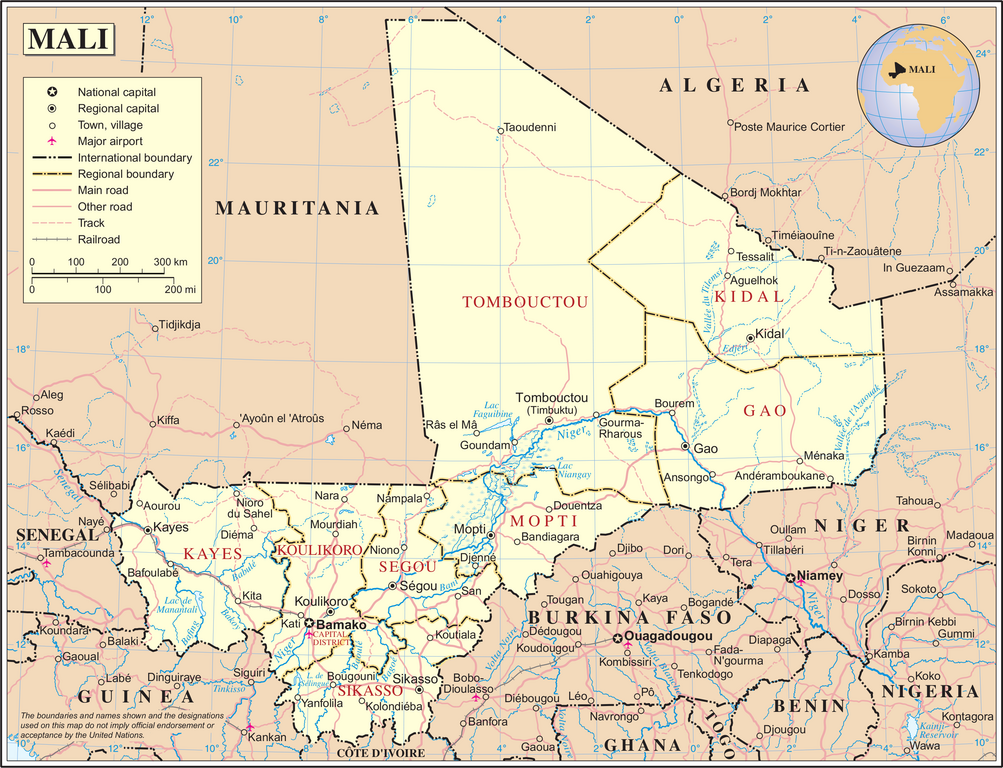

Particularly notable is JNIM’s Katiba (batallion) Macina, a militant Islamist group led by Emir Amadou Kouffa (aka Amadou Barry), which operates between Ségou and Mopti. Another one, the Katiba du Serma, in Sikasso—at a strategic junction toward Côte d’Ivoire—has also become relevant as transport routes from Senegal and Côte d’Ivoire come under attack. Mali’s landlocked position and centralized road infrastructure heighten its vulnerability. Unable to secure these routes, state forces have struggled to prevent JNIM from disrupting supplies to Bamako as part of its strategy to demonstrate that the government is incapable of protecting the Malian population.
These patterns mirror broader regional trends, with over 70% of violent incidents in North and West Africa occurring near major roads. By targeting fuel transports and blocking key transportation corridors, JNIM both restricts economic flows and asserts a form of parallel governance. Counterterrorism efforts by the Malian Armed Forces (FAMa), together with the Russian Africa Corps (formerly Wagner Group), have yielded limited results until the end of October.
Effects on Everyday Life
Fuel shortages have sharply slowed Bamako’s normally dynamic street life. When a tanker does reach the city, long lines of motorcycles and cars trail it, hoping to refuel before stocks run out. Deliveries to the central market have contracted and visitor numbers have dwindled as rising transport costs increasingly prevent residents from making the trip. With fewer customers coming in and less labor needed overall, the informal sector is heavily hit. Day laborers — especially those who rely on vehicles such as moto-taxis, taxis, or Sotrama — are often left without work.
In the regions of Ségou and Mopti fuel prices have surpassed US $6 per liter (compared to US $1,34 in April this year), while persistent shortages have drastically reduced electricity availability. Large parts of Bamako now receive fewer than six hours of power per day, straining hospitals, businesses, and households. Schools and universities were closed for about two weeks by order of the Ministry of Education.
While economic pressures weigh on Bamako, certain rural areas encounter more direct forms of JNIM’s coercive influence. In areas where the state is absent, zakat is collected to finance the group, and public punishments—such as the recent hanging of a TikTok user who praised the Malian Armed Forces (FAMa) in her recent posts—serve to intimidate the broader population and underline state weakness. While parallel governance structures are emerging (and in some places, re-emerging), despite recent headlines the prospect of JNIM taking Bamako remains far-fetched, because their presence is limited to rural areas that the state already finds hard to control.
Junta under Pressure
For Bamako’s residents, the current crisis reflects deeper structural problems the ruling junta has not resolved since it took power in August 2020. In 2023, a corruption scandal triggered weeks of severe power cuts, revealing the vulnerability of the capital’s energy system. Small, energy-intensive businesses were unable to operate and demanded minimum energy guarantees.
These economic pressures intersect with the deteriorating security environment. While northern and central Mali have long faced militant Islamist groups, similar patterns are now visible in the west and south. In an interview from October 2024, Amadou Kouffa pointed to human rights abuses committed by the FAMa, the state-allied Dozo militias, and Wagner Group (later: Africa Corps) as drivers of JNIM’s expansion. While he invoked this argument to advance his own narrative, the underlying fact is accurate. Independent investigations have documented that these forces have committed repeated human rights violations, fueling grievances that JNIM has been able to exploit. The crisis therefore intensifies pressure on the junta, which has not able to condemn or push back against these violations and has yet to deliver improvements in living conditions.
Bamako and the southern regions have historically been the core support base. Should public confidence erode in the capital, the country may approach a critical juncture at a moment when stability is urgently needed.
This is a cause for concern among civil society actors. The regional network WADEMOS has issued an open letter, signaling that “[w]hat was once a crisis of governance and legitimacy has now evolved into a multidimensional emergency combining security, humanitarian, and economic collapse”. The Chairperson of the African Union Commission, H.E. Mahmoud Ali Youssouf, has also expressed concern and urged “a robust, coordinated, and coherent international response to counter terrorism and violent extremism.” Who exactly is addressed remains unclear. The junta must achieve successes immediately to maintain support from the population and from within its own ranks — the military. What scenarios are conceivable?
Scenario I: FAMa and Africa Corps Regain Control Militarily
FAMA’s recent tactical adjustments in October—carried out with Africa Corps support—have already produced observable effects and now provide a baseline of security for key infrastructure. Operation Fuga Kènè, launched by FAMA and led by Brigadier General Famoukè Camara, aims to break JNIM’s war of attrition by securing the strategic triangle of Sikasso, Kadiolo, and Konlondièba. The operation entails the deployment of heavily armed FAMa and Africa Corps units along key corridors to ensure the safe movement of fuel tankers and to stabilize the flow of essential supplies.
In Bamako, this has translated into more frequent fuel deliveries, the disappearance of long queues at gas stations, the return of traffic congestion, and a slight improvement in electricity distribution in several neighborhoods. Ségou also received more than three escorted convoys in November after spending nearly the entire month of October without fuel, and Mopti is expected to be supplied next.
If this momentum is maintained, Operation Fuga Kènè may consolidate the current gains by protecting supply lines and preventing further disruptions. The visible improvement in fuel and energy access has already allowed the junta to regain political credit and demonstrate that it can reverse the situation militarily.
Scenario II: Negotiations with JNIM
A non-military approach to consider is that the junta can turn back to the channels first opened under former President Ibrahim Boubacar Keïta in 2020 and later revived by Prime Minister Moctar Ouane, which were designed to initiate dialogue with JNIM. Although JNIM’s position has strengthened compared to 2020/21, the coalition’s limited size still prevents it from seizing major cities or broadly imposing its ideology. Even during its earlier, weaker phase, senior JNIM figures had already indicated a willingness to negotiate. There are signals that JNIM intends to use those channels that were used to negotiate the release of hostages to directly negotiate with the junta.
Once these channels are re-established, the junta would need to engage the public in an open debate on the relationship between the state and Islam, thereby creating the political and social foundation on which its negotiating team can rely. For such talks to be credible, it is essential that the government’s negotiation team is backed by key religious authorities, traditional and local leaders, and civil society actors. Strong resistance to Salafi-inspired ideas continues to come from influential Sufi circles, especially within the High Islamic Council of Mali under its prominent president, Chérif Ousmane Madani Haïdara. Neutral external mediators would facilitate the peace process, with the African Union supporting the mediation team.
Scenario III: JNIM‘s Fragmentation
The present circumstances bear a certain resemblance to those of January 2013. In 2012, Islamist groups captured a Tuareg rebellion in northern Mali. Facing little resistance by FAMa, these groups—AQIM, Ansar Dine, and MUJAO—quickly seized control of key towns and transportation routes in the Gao, Kidal, and Timbuktu regions. These Islamist factions were not centrally organized. They acted autonomously but were driven by similar interests and overlapping objectives, most notably to establish Sharia law in Mali. Ultimately, it was the uncoordinated attacks around Sévaré and Konna in the central Mopti region in January 2013 and the following international intervention (Opération Serval) that led to the fracturing of these coalitions, the weakening of the individual groups, and the subsequent years of reconfiguration and reorganization.
Although JNIM appears more cohesive than those earlier factions, its semi-autonomous elements leave it vulnerable to the same uncoordinated actions that undermined Ansar Dine, AQIM, and MUJAO in early 2013. The fragmentation or internal collapse of JNIM would provide the junta with valuable room to maneuver, allowing it to combine targeted counter terrorism operations along with selective dialogue initiatives with groups willing to negotiate.
Scenario IV: Consolidation of the Status Quo
So far, the junta has shown limited willingness to engage with regional partners beyond its current allies—the Alliance of Sahel States (AES) and the Russian-affiliated Africa Corps. Although joint counterterrorism operations with Niger and Burkina Faso constitute a formal pillar of the alliance’s defense pact, little is known about their practical implementation and both partners remain heavily burdened by their own security crises. As a result, their support for Mali is more symbolic than operational.
While simplified customs procedures and armed escorts for fuel tankers have been introduced as a response this fall, transport routes remain insecure and import volumes are unlikely to increase. According to an anonymous member of the National Transitional Council and an opposition figure, no meaningful measures to curb fraud have been adopted. In the absence of such reforms, the state cannot sustainably ensure the security of its population or the stability of its economy, even if military operations deliver short-term gains. Under these conditions, JNIM can sustain—if not gradually intensify—its tactics, leaving the energy supply fragile and economic pressures mounting.
Complete state collapse or the capture of Bamako remains improbable. JNIM has not administered a single locality since the 2012 occupation of northern Mali, let alone a national capital.
While re-organized counterterrorist operations improved the immediate situation, a long-term political agenda involving regional partners and the country’s population is necessary to safeguard the economy and its people. Scenario I, which is currently the most likely outcome, could initiate this. However, if political reforms are not implemented alongside this, scenario IV becomes more likely.
Series
Related Posts
Tags

Jonas Schaaf
Latest posts by Jonas Schaaf (see all)
- Mali’s Acute Security and Energy Crisis in Bamako and Beyond: Four Scenarios for the Road Ahead - 9. December 2025
- The New US Administrations’ Africa Policies: What to Expect and Why it Matters - 20. August 2024
- Keine Freude über den Abzug - 25. May 2023