

Survival of Colombia’s Peace Architecture will Depend on Institutional Resilience, Civil Society Engagement, and International Support
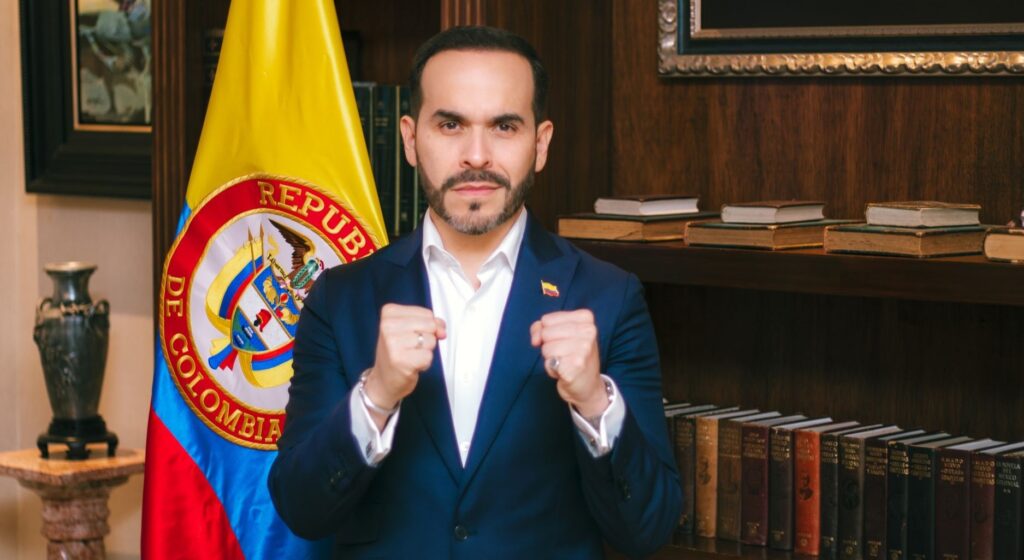
Colombia is at the cusp of a major political shift in governance. Right-wing leader Abelardo de la Espriella will take over as President of Colombia on August 7. Promising to adopt a hardline approach, De La Espriella has said he will rule with an iron fist, end all peace negotiations, and dismantle key provisions of the 2016 peace agreement with FARC-EP (Fuerzas Armadas Revolucionarias de Colombia – Ejército del Pueblo). While some of his promises may never see the light of day, concerted multi-stakeholder efforts would be needed to keep the peace architecture intact.
As Colombia approaches the tenth anniversary of the 2016 peace agreement signed between the Government of Colombia and FARC-EP (Fuerzas Armadas Revolucionarias de Colombia – Ejército del Pueblo), the country is undergoing a significant political shift. In June of this year, Colombians elected Abelardo de la Espriella, a right-wing leader who was endorsed by US President Donald Trump.
A former lawyer also known as “El Tigre” (“the Tiger”) among his supporters, Espriella will assume office on August 7. He secured 49.66% of the votes, defeating his nearest rival, Iván Cepeda – a left-wing politician supported by current President Gustavo Petro – who won 48.7% of the ballot. While the margin of victory is the smallest ever in the country’s electoral history, Espriella received 12.9 million votes.
President-elect Espriella campaigned promising to rule with an “iron fist,” in sharp contrast to President Petro’s 2022 initiative to achieve total peace or “Ley de Paz Total.” Espriella also vowed to end negotiations with armed groups, revive reliance on the military for law enforcement, and abolish institutions for transitional justice and territorial development that are key provisions of the 2016 peace deal.
Espriella has promised to strengthen security, rigorously implement the rule of law, and relaunch Plan Colombia, supported by the United States, to eradicate drug trade using the military and law enforcement agencies. He also announced that the Jurisdicción Especial para la Paz (JEP), the “Special Peace Jurisdictions,” would be abolished, and that the territorial development “Programas de Desarrollo con Enfoque Territorial (PDET),” another cornerstone of the peace agreement, would also be ended.
To understand the implications of the coming shift, we spoke with Professor Stefan Peters, Chair of International Relations Peace Studies at Justus Liebig University Giessen in Germany, and Academic Director of Instituto Capaz in Bogotá, Colombia. He is a leading scholar of peacebuilding, transitional justice, and Latin American politics, and as Director of the CAPAZ Institute – an institute with 39 partner universities and research organizations from Germany and Colombia – directly involved in practice-oriented analysis and academic support for the peace process.
What is the significance of Abelardo de la Espriella’s election as the next president of Colombia, given that his campaign promises, if implemented, would undermine the implementation of the 2016 peace agreement?
Abelardo de la Espriella won the election in the second round with a very narrow margin, and he will take office on 7 August, so in just a few days. The country is very polarized, and one of the main topics of this polarization is peace.
From 2022 to 2026, under President Gustavo Petro, Colombia had the first left‑leaning government in its history. Now there is an important political shift towards the right. Espriella represents a new kind of far right in Latin America.
Across Latin America – and even beyond, in the United States under President Donald Trump, and in parts of Europe – we see a more general shift towards the right, and sometimes, the far right. Javier Milei in Argentina, José Antonio Kast in Chile, Keiko Fujimori in Peru, and Nayib Bukele in El Salvador. Colombia is no exception.
De La Espriella wants to be a strong ally of Donald Trump. He also made positive statements about Bukele’s model in El Salvador, especially regarding the mega‑prisons, and he emphasized security.
Regarding peace, De La Espriella announced during the campaign that he wants to dismantle key institutions and instruments of the 2016 peace agreements. This will be difficult to implement exactly as stated. He will need agreements with different parties from the right and center‑right, and these institutions are also protected by law. So, what he declared may not be fully implemented.
However, there is no doubt that he has no ambitions to push forward the implementation of the peace process, and even less interest in continuing dialogues with the different non‑state armed actors operating in vast parts of the country, especially in peripheral regions of the Caribbean coast, the Pacific coast, and the Colombia‑Venezuela border, as well as parts of the Amazon.
Recently, he also declared that he would deprioritize human rights and international humanitarian law, and that certain entities currently linked directly to the presidency would be downgraded, while strengthening security. These are worrying signals.

The incoming president has said that he would end Gustavo Petro’s “Paz Total.” He has stated clearly that there would be “no political negotiation with illegal armed groups,” and that the strategy of the State would be oriented toward submission to justice. He argues that the peace processes have ended up “empowering illegal structures and weakening State authority.” Will he be able to end negotiations altogether?
Until now these are declarations, and “submission to justice” is very much in line with the image De La Espriella wants to project of himself as a strong leader who works for the security of the people in the country. However, what does “submission to justice” really mean?
Some members of criminal organizations now in prison have made statements expressing their willingness to cooperate with the new government. However, the groups will not demobilize without receiving benefits.
We should have learned that powerful non‑state armed actors, linked to transnational organized crime, do not simply surrender. A military victory is not very realistic. Militarization is, furthermore, at odds with the protection of civilians. Actually, the human rights record of the Colombian armed forces during the Plan Colombia period clearly highlights the considerable risks of going back to a militarized strategy.
We also have to talk about urban violence, because there is organized crime with many armed people in cities such as Medellín and Barranquilla. Perhaps it would be possible to capture some important individuals from these structures, but the underlying problem would remain.
Yet, it is important to mention that Espriella has a point: in many parts of the country, these non‑state armed actors have grown stronger in recent years. We need very serious, open reflection on the “Total Peace” approach – its problems, causes for its lack of success, but also what went fairly well. Although it was not successful, there is a lot to learn from it and its huge archive of information. This includes insights into the reconfiguration of the armed groups, their goals and priorities that are relevant not only for Colombia but also in other contexts in Latin America, which can potentially make dialogues more effective. Moreover, we can see that dialogues improve the humanitarian situation for civil society in regions “governed” by well-established rebel or criminal organizations.
Unfortunately, it seems Espriella does not have any ambition to learn from recent experiences but instead wants to cut off all communication with the outgoing government of Gustavo Petro. So, the lessons learned will probably not be used.
Here academia has an important role: to conduct research, communicate insights to a broader public, and hopefully, ensure that decision-makers make use of these insights.
The revival of Plan Colombia with the support of the US is one of De La Espriella’s campaign promises. Will that succeed in eradicating drug production, or will it lead to atrocities by government troops and a revival of armed insurgencies, kidnappings and murders, given that people engaged in drug production and trade are armed, violent and highly organized? Some evaluations of Plan Colombia, which saw the US government pouring in billions of dollars to fight the drug trade, have found that it was ineffective and counterproductive.
There is a vast and very polarized debate about Plan Colombia. It is true that Plan Colombia strengthened the Colombian military. It was also a factor in weakening the former FARC-EP. But there is a huge problem with it. It reinforces the idea that the problems of Colombia – and perhaps also of the region or other parts of the world – can be solved first and foremost by force.
Yes, we probably need a strong security apparatus, but it will be impossible to achieve a peaceful future without considering economic and social factors, and probably also cultural issues, education, etc. In short, the underlying causes of violence.
Colombia continues to be the most important supplier of coca and cocaine to the world. The trafficking routes are changing, the markets are changing – more Europe, more Asia – but the problem remains.
The war on drugs has lasted six decades. What is the result? A lot of money spent, tens of thousands of victims, and the problem remains, or has even increased, as production and consumption continue. Criminalization and militarization just do not work.
Militarization has not eliminated coca. What is now being discussed again is fighting drug production through fumigation with herbicides. However, this approach is very problematic. Fumigation targets not only illicit coca leaves – it also affects legitimate agriculture, is detrimental to the health of communities, and thereby, weakens the legitimacy of the State. Communities see the State not as a protector or supporter with social programs, but as an actor that threatens their income – illegal in part, yes, but also legal – and their ability to buy food, send their children to school, and access healthcare. Some areas of illicit cultivation may be eliminated, but production will simply move to other areas – within Colombia, in Ecuador, wherever. The demand for drugs is so high that there will always be providers.
Moreover, transnational organized crime has diversified its portfolio to include illegal mining of gold and other minerals, human trafficking, extortion, and more.
To put it simply: these organized crime structures are not afraid of the military, the police, or other mechanisms. They can change their business model quickly, and they are actually experts at adaptation and highly resilient.
As a consequence, we need smarter strategies than just force.
De La Espriella has also promised to abolish key components of the 2016 peace agreement, such as the JEP, the “Special Jurisdictions for Peace,” which deal with crimes committed by FARC-EP members, the armed forces, government officials, and other actors. What would be the consequences of abolishing the JEP?
The Special Jurisdiction for Peace (JEP) is one of the cornerstones of the transitional justice process, and one of the most innovative mechanisms for coming to terms with the past through transitional justice. One of its main innovations is its focus on restorative justice.
De La Espriella argued that if he could, he would abolish the JEP. To put it very simply: he cannot. There are legal and constitutional barriers that protect the JEP. But if, hypothetically, he could abolish the JEP, what would it mean? It would mean legal insecurity for ex‑guerrilla fighters from the FARC, and also for those most responsible for serious human rights violations from the military forces. Although they will probably maintain their legal benefits.
Still, De La Espriella knows quite well that he will not be able to abolish the JEP. So, this is first and foremost a discursive attack that aims to delegitimize the JEP. This is no coincidence. The new government can actually reduce the JEP’s budget. That is a huge risk. Regarding the JEP’s work, we are currently in a phase where restorative justice measures are being implemented. These are highly innovative and internationally recognized. Yet, budget cuts can turn the restorative approach into a deadlock. Victims’ groups will be affected, and in the end, the right will use claims of deception by the victims to legitimize their delegitimization of the JEP.
Given all the proposed changes, how do you view the road ahead?
For Colombia, this is a decisive moment. The incoming administration’s agenda announces a retreat from negotiated peace, a return to militarized security, and a weakening of transitional justice institutions. Not all declarations may materialize, but the direction is unmistakable.
Whether Colombia’s peace architecture can withstand the pressures ahead will depend on institutional resilience, civil society engagement, and international support. And academia has a crucial role: documenting lessons from the “Total Peace” experiment, analyzing evolving security dynamics, and communicating insights to policymakers and the public. Peacebuilding requires a serious public debate based on arguments that challenge easy answers to very complex questions. The CAPAZ Institute will continue to do exactly this, and our work will probably become even more important. Given the highly polarized context, we will maintain spaces for public debates on crucial issues related to the violent conflict based on academic and comparative insights and thereby bring discussions to a more objective level. This includes topics like human rights, Transitional Justice, memory and peace education, broader concepts of security, environmental peacebuilding, and the important role of gender perspectives in peacebuilding. We will also continue our academic support for the JEP and other entities crucial for the peace process, victims’ organizations and civil society in Colombia.
Series
Related Posts
Tags

Stefan Peters
Latest posts by Stefan Peters (see all)
- Survival of Colombia’s Peace Architecture will Depend on Institutional Resilience, Civil Society Engagement, and International Support - 4. August 2026
- Democracy Can’t Be Imported - 16. January 2026
- Imperialistische Gewalt im „Hinterhof“: Hintergründe und Implikationen der US-Militärintervention in Venezuela - 9. January 2026