

Just Lay People’s Views? Learning from citizen perspectives for people-centered peace and security governance
In line with the vision of an ‘ECOWAS of the People’, this Spotlight argues that ECOWAS must more actively integrate citizens’ perspectives into its peace and security work. Findings from a five-year research project in Burkina Faso and The Gambia show deep distrust and disappointment among elites and everyday citizens over the organization’s handling of political crises. Although some actions are appreciated and expectations are high, a wide gap persists between ECOWAS and West African citizens. The Spotlight demonstrates that citizens’ views are both a measure of public support and a crucial guide for making ECOWAS more people-centered.
As it marks its 50th anniversary, the Economic Community of West African States (ECOWAS) is confronting a profound crisis. Nowhere is this more evident than in its struggle to address the region’s deteriorating democratic governance, highlighted by the seven coups d’état that have taken place in West Africa since 2020. Tied to this is a growing popular backlash, both in the virtual and in the physical world, against an organization that is seen as unable or unwilling to address West Africans’ most pressing security and economic needs.
In a time of eroding multilateralism, growing geopolitical competition, and rising institutional distrust, regional cooperation for peace, security, and economic development, as stated in the 1993 Revised ECOWAS Treaty, is all the more important for West Africa.1 Yet, recent years have shown that business as usual is no longer an option. The outgoing Chairman of the Authority of ECOWAS Heads of State and Government, Nigeria’s President Bola Ahmed Tinubu, therefore called the Golden Jubilee ‘not just a celebration, but a moment of renewal’.2 Central to this aspiration of renewal is whether and how the organization can reconfigure its relationship with the 400 Mio. citizens in the region.
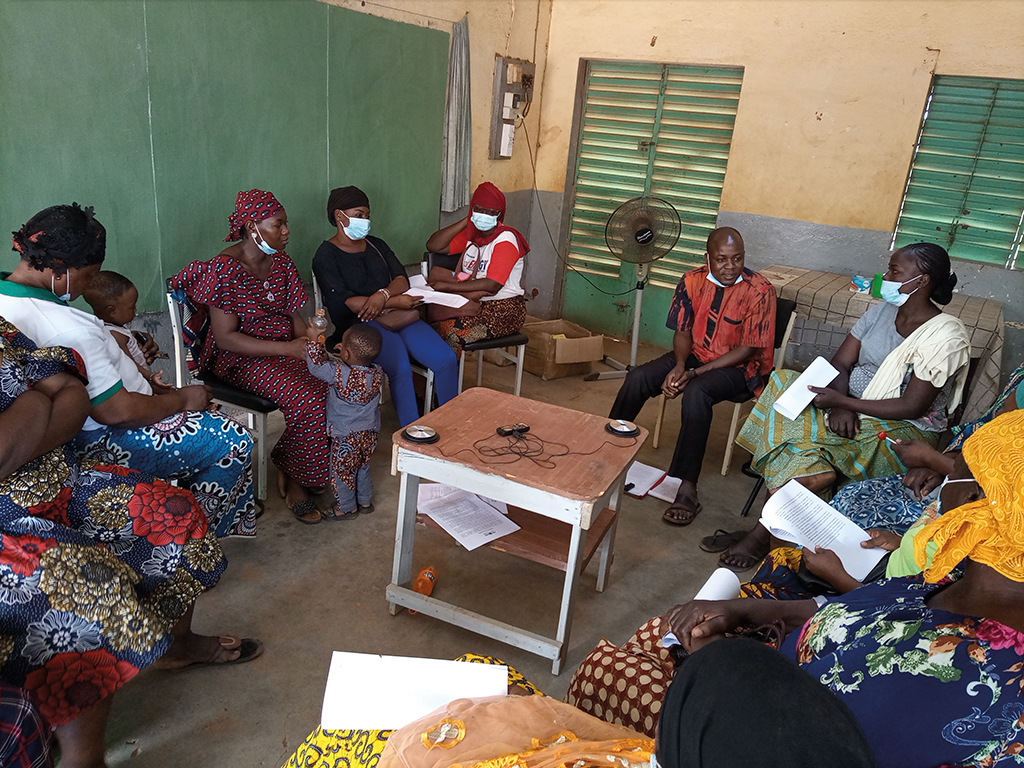
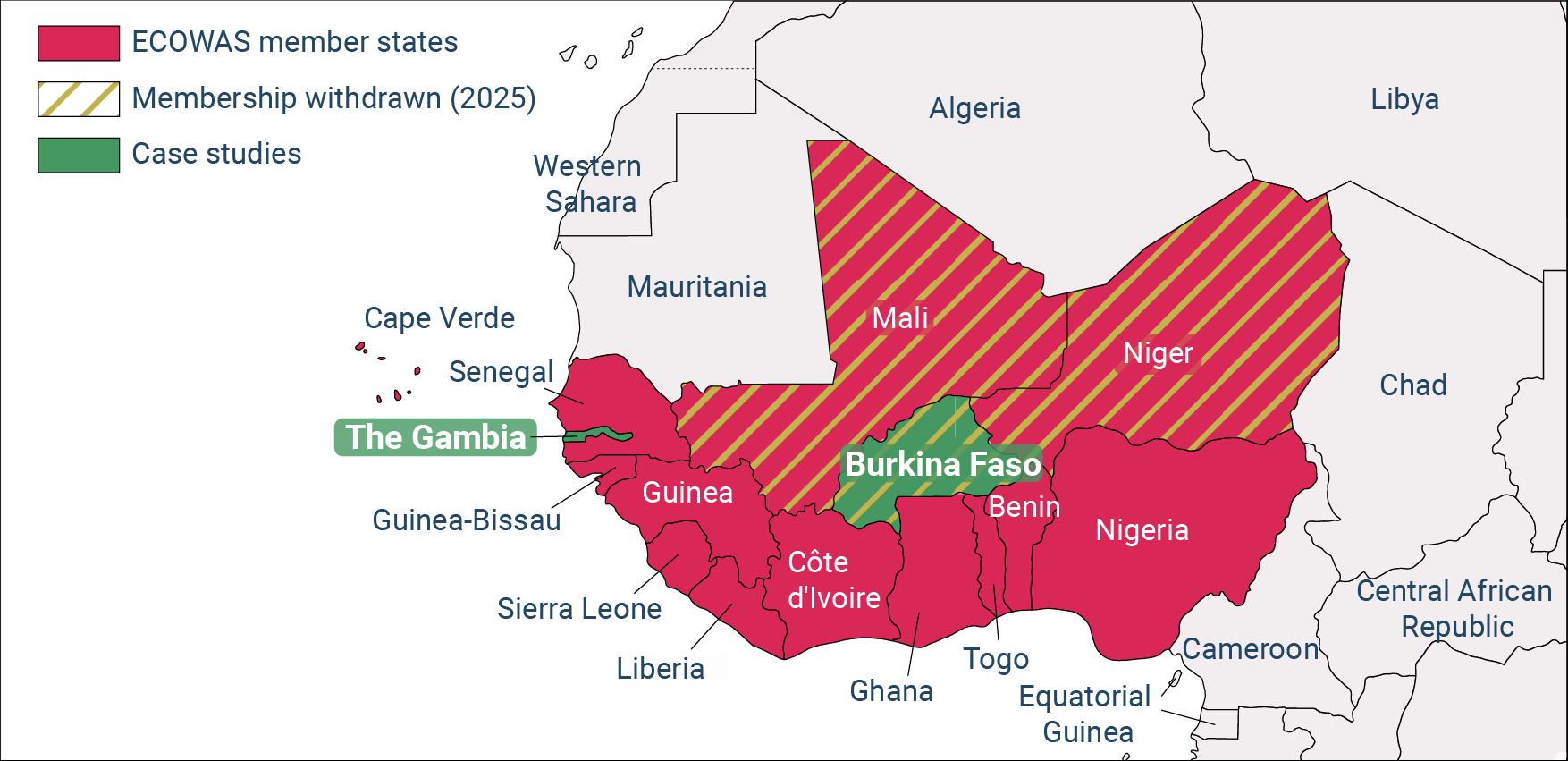
In line with the aspiration toward an ‘ECOWAS of the Peoples’ and ‘Peace and Prosperity for All’ formulated in the ECOWAS Vision 2050,3 this Spotlight argues that ECOWAS must more proactively engage with and integrate citizens’ experiences and perspectives to advance its peace and security agenda. Based on findings from a five-year research project,4 we argue that citizens’ views are both a measure of public support and a crucial guide for making ECOWAS more people-centered. Concretely, the research project was carried out in two countries that experienced regional interventions in situations of political crisis: Burkina Faso (2014/15) and The Gambia (2016/17). Both have been widely considered successful cases of regional conflict management5 and are exemplary of situations in which the African Union (AU) and ECOWAS followed the institutional script for breaches of the anti-coup norm (‘zero tolerance against unconstitutional changes of government’). The organizations intervened by non-military means, and in the case of The Gambia with military means as well, thus decisively shaping how the respective crises were resolved (see Text Box 1 and 2). Using a qualitative, collaborative research approach (see Text Box 3), the research team examined how citizens in Burkina Faso and The Gambia experienced and evaluated the ECOWAS interventions, and what citizens know about and expect from ECOWAS.
Our findings point to profound distrust and disappointment among elites and everyday citizens concerning ECOWAS’ management of political crises in member states. Despite notable appreciation of ECOWAS policies, citizens perceive ECOWAS to be partial, late to act, incoherent, and with hidden agendas, and they criticize ECOWAS for failing to prioritize preventive approaches. Beyond the recent societal backlash against ECOWAS after the latest coups in the three Sahelian states Burkina Faso (2022), Mali (2020/21) and Niger (2023), and their exit from ECOWAS thereafter, there is a much more profound gap between ECOWAS and West African citizens. At the same time, our findings elucidate clear, and at times far-reaching, societal expectations directed toward the regional organization. This is generally good news for ECOWAS, and offers a valuable opportunity to learn from citizens’ perspectives.
Key Findings
Overall, our research demonstrates that the ways in which regional interventions are experienced and assessed locally depends greatly on their context. Perceptions of regional interveners are shaped by earlier collective experiences and the immediate realities on the ground, with a clear difference between the perceptions of elites and those of ‘everyday citizens’.9 However, there are four overall findings we can draw from our research.
1. Everyday Experiences Shape Citizens’ Understanding of ECOWAS
Our focus groups and interviews reveal research participants’ limited formal knowledge about ECOWAS structures and policies. This echoes findings from Afrobarometer surveys which show that a large number of West Africans do feel knowledgeable about ECOWAS.10 However, our research also shows that apart from scholarly education, it is concrete everyday experiences – such as with the opportunities of free trade, the ECOWAS passport, or deployment in and of ECOWAS missions – that shape citizens’ knowledge and perceptions of ECOWAS. Interventions are crucial moments for such experiences. How they unfold and how they are experienced therefore matters greatly for how citizens (get to) know ECOWAS.
2. Local Critiques Reveal Perceptions of Bias and Delay
Even before the more recent wave of societal backlash experienced by ECOWAS in Burkina Faso, Mali, and Niger, regional interventions were locally more contested than hitherto often assumed. They were criticized for being partial, for having hidden agendas, and for serving ECOWAS interests rather than those of the receiving societies. While these criticisms are all in line with the broader perception of the organization as ‘Club of Heads of State’, there is also strong critique of ECOWAS’ failure to intervene in situations deemed critical: for coming too late, especially in situations where sitting presidents manipulated constitutions to prolong their stays in power, and for not following their own policy norms consistently, especially regarding the protection of democratic rights. Burkinabè citizens, for instance, particularly those who were actively involved in mobilizing protests against President Blaise Compaoré’s attempt to prolong his stay in power, criticized the regional organization for coming ‘too late’, describing the mediation as partisan and viewing the externally brokered transition as a ‘stolen revolution’ and an ‘imposed’ process that undermined the momentum of their popular revolution. In The Gambia, the strongest critique is put forward against the continued presence of ECOWAS forces, describing them as an ‘occupying force’, questioning the real intentions of the organization and Senegal – the main troop contributor –behind the mission, and denouncing the insecurity created by ECOWAS troops, especially in Foni, Jammeh’s former stronghold.
3. Everyday Citizens Value ECOWAS for Restoring Peace
However, alongside critique, our research also shows a so far neglected and notable appreciation of ECOWAS interventions, especially among more marginalized sectors of the societies, who welcome the restoration of ‘peace’ and ‘normal life’ as well as the prevention of (more) violence. In Burkina Faso, everyday citizens equated regional mediators with traditional peacemakers, calling them sougkoata (‘those who beg pardon’). This underlines the high cultural and normative value attributed to those sent by the regional organization. In The Gambia, too, everyday citizens experienced the intervention as the ‘return of normalcy’ after a period of uncertainty. With the resolution of the political crisis, tensions eased, markets reopened, and citizens felt safe to return to their homes.
4. Despite Critique, Citizens Want More – Not Less – ECOWAS
Despite articulated criticism of and disappointment with a poor implementation record and inconsistent application of norms, citizens count on ECOWAS and articulate far-reaching expectations as well as a demand for a consistent application of existing policy instruments. In spite of this seeming contradiction, it is here, where focus group participants and interview partners wanted to see more, and not less ECOWAS, especially in the field of conflict prevention, infrastructures, and development. While there was much discussion of what needs to change, none of the research participants proposed closing down the organization.
Policy Implications: What to Learn from Local Perceptions?
These findings are both a source of hope and a potential burden for ECOWAS, because much will depend on whether the regional organization is able to become truly people-centered. During the celebrations of the Golden Jubilee, the President of the ECOWAS Commission, Omar Alieu Touray, observed that ‘people, especially the youth, are impatient – and rightly so. We must listen to their frustrations and expectations if we are to remain relevant.’12 Our findings provide insights into how people’s perspectives can be constructively used to define concrete steps for ECOWAS’ ‘moment for renewal’13. First, to become people-centered, ECOWAS should systematically gather knowledge about citizens’ views by continuously surveying and monitoring public opinion – not only during crises or interventions, but also in times of assumed normalcy. Second, in order to address the existing knowledge gap about ECOWAS among West African citizens, the organization needs to become more experienceable. ECOWAS country representations should be strengthened and provided with a budget to run projects and become a point of contact and interaction. Third, ECOWAS projects and outreach activities should aim beyond capital cities and take the diversity of lived realities of ECOWAS citizens into account. Fourth, proactive and continuous communication is key for managing expectations and preventing misinformation. For ECOWAS military interventions in particular, a clearly formulated and communicated mandate is required, including for tasks, goals, exit strategies, as well as updates on extensions and adjustments. Fifth, the inconsistent application of norms erodes citizens’ trust in ECOWAS. ECOWAS should consistently apply its normative instruments to protect political and human rights and invest more in structural conflict prevention to foster regional stability.
Further Research Team: Omar M Bah, Karamba Jallow, Pascaline Kaboré, Adjara Konkobo, Simone Schnabel
 Download (pdf): Witt, Antonia; Birchinger, Sophia; Jaw, Sait Matty; Kaboré, Amado (2025): Just Lay People’s Views? Learning from Citizen Perspectives For People-Centered Peace and Security Governance, PRIF Spotlight, 14/2025, Frankfurt / M.
To the list of references.
Reihen
Ähnliche Beiträge
Schlagwörter

Latest posts by Antonia Witt (see all)
- Just Lay People’s Views? Learning from citizen perspectives for people-centered peace and security governance - 16. Dezember 2025
- Cohérence politique pour la paix dans l’engagement allemand au Mali et au Niger ? Cinq recommandations d’action pour le gouvernement allemand - 8. September 2022
- Policy Coherence for Peace in Germany’s Engagement in Mali and Niger? Five Recommendations for Action for the German Government - 8. September 2022

Sophia Birchinger
Latest posts by Sophia Birchinger (see all)
- Just Lay People’s Views? Learning from citizen perspectives for people-centered peace and security governance - 16. Dezember 2025
- The Women, Peace and Security Agenda, the African Union and its citizens: A People-Centered Agenda? - 3. September 2025
- Sinal de Alerta para Novos Conflitos: Crescente Polarização Social na Guiné-Bissau - 3. September 2024

Sait Matty Jaw
Latest posts by Sait Matty Jaw (see all)
- Just Lay People’s Views? Learning from citizen perspectives for people-centered peace and security governance - 16. Dezember 2025
- #GambiaDecides2021: A Sign of Democratic Hope? - 14. Dezember 2021